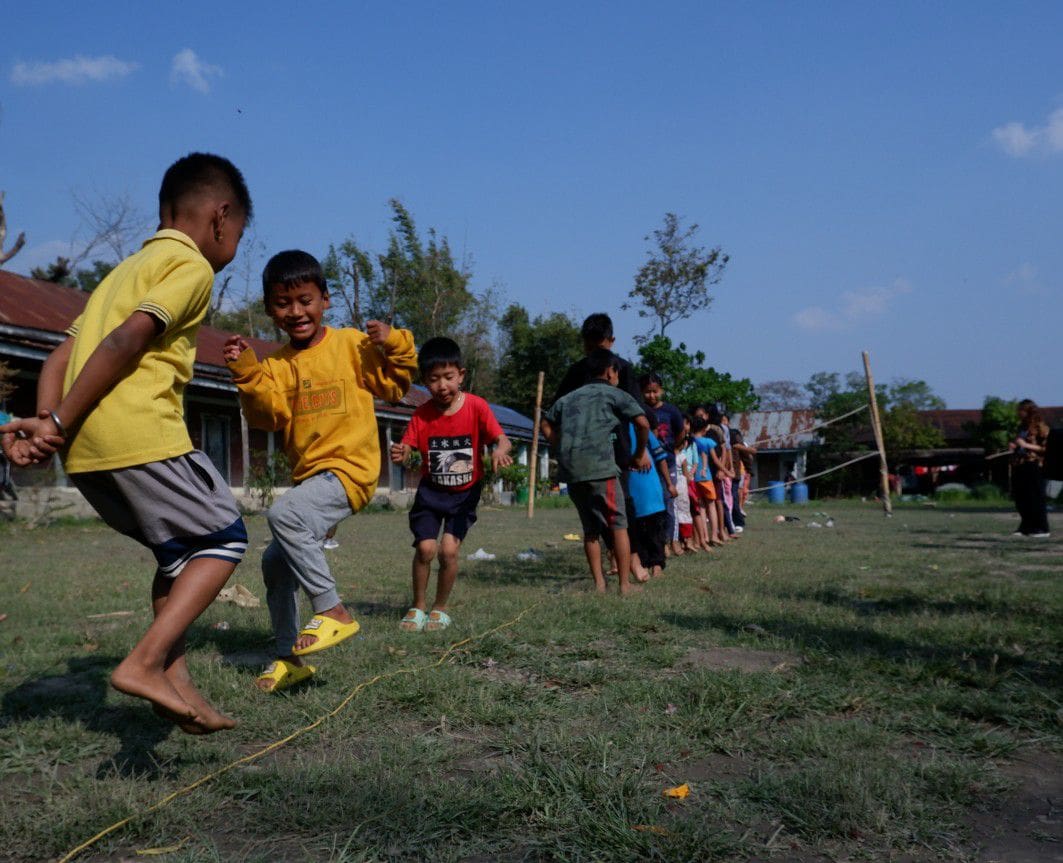
Manipur’s forgotten adolescence: Why we must pause for children too

On the evening of May 3, 2023, I was in a reading room when a curfew was announced across several districts in Manipur. There was a sense of eerie calm, with cars rushing back to beat the curfew. I had already seen visuals of arson on social media that appeared to be communal. I thought it might be something small, over within a day. But I also had the eerie feeling that it could last for years. This was the day the violent crisis in Manipur erupted.
It has now been over two years. Thousands have been pushed into homelessness, including children, people with disabilities, and the elderly. Infants have only known life inside relief camps, meant to be temporary shelters that never moved on. What were once thriving schools and colleges now serve as housing, with families packed into single rooms divided by nothing more than cloth. In Phayeng High School, a government school in Imphal West, the compound was split between classrooms where regular lessons were held and makeshift shelters.
The prime minister is finally visiting Manipur after two years of silence. Media attention will return for a day or two. The conversation will once more circle around politics, blame, and statistics. Those questions matter but what about the children?
This is not only a humanitarian crisis but an intergenerational one. To think of Manipur today from the mainland is to imagine natural beauty, culture, or the politics of leadership failure. Rarely do we imagine the adolescents and children growing up in this crisis, their education interrupted and their adolescence stolen.
In the hierarchy of needs, life skills may sound less urgent. Who would think about empathy, stress management, or decision-making when food, shelter, and schools are still insecure? Yet it is precisely in these circumstances that we must not compromise on what it means to live productive and socially integrated lives. UNICEF reminds us that in emergencies, life skills are not luxuries but survival tools. In the Democratic Republic of Congo, a program teaching coping and community skills measurably reduced PTSD and improved peer relationships. Research shows adolescence is the window where resilience is built or lost forever — and toxic stress at this stage can permanently impair brain development and self-esteem.
And yet in Manipur, schools that have reopened often prioritise academics, ignoring psychosocial support. Some reports suggest that even fee concessions for displaced children have been withdrawn. Teachers are protesting unpaid salaries. How can education be reduced to just exams when healing is most urgent?
What do children stand to lose? Beyond food and shelter, they need the ability to build livelihoods, manage families, and participate in society. Without these, young people often turn to alternatives: drugs, crime, or despair — magnified by inequality.
Elsewhere in the Northeast, and across mainland India, adolescents grow up as Gen Z or Gen Alpha, preparing to seize the opportunities of the world’s third-largest economy. They take competitive exams, play sports, travel, and plan futures. Meanwhile, a child in a relief camp in Manipur is still processing why their home was burned, why they feel guilty for surviving, and why their family struggles to recover while others already have. Adolescents here grapple not only with the usual stresses of puberty and identity but also with displacement, stigma, and communal hate all around them.
What does this mean for the future? Without space to process trauma, frustration festers. Already, Manipur faces staggering unemployment, even among the highly educated. Without life skills, the risk is that despair translates into drugs, crime, or deeper division.
Zoom out, and the national picture is even bleaker. For decades, India has racialised and othered the Northeast, constructing “Northeastern” as an identity only in relation to the “mainland” gaze — often reduced to faces, not voices. The nation pauses for elections and cricket, but can it not pause for Manipur’s children?
I chose not to look away. Leaving behind an academic career, I founded Tengbang Sintha Foundation and began the Nawa Lousing Life Skills Program. We train young volunteers to stand beside adolescents, teaching coping, empathy, and decision-making — not as abstractions but as survival. We are piloting a companion program so children are never left alone with trauma, nor parents left to shoulder recovery by themselves.
Our resources are thin and media attention fleeting. But as Manipur re-enters the headlines, even briefly, I ask: Can we, as a nation, pause for its children too? Can we imagine an adolescence beyond survival for them?
Khaidem Nongpoknganba is a social entrepreneur from Manipur and the founder of the Tengbang Sintha Foundation, an NGO working with conflict-affected children.