Majlis’ fight for reclaiming Auranagabad

Aurangabad, a region with a significant number of Muslim voters, deep historical roots, and a vibrant socio-political landscape, is once again a focal point in Maharashtra’s political arena. The All India Majlis-e-Ittehadul Muslimeen (AIMIM), which has a strong foothold in the city, is gearing up for the assembly elections with a strategy to consolidate its position in constituencies where it enjoys significant support.
Majlis focused on strength, confident of success
For the 2024 Maharashtra Legislative Assembly elections, AIMIM has strategically decided to contest only 16 seats, prioritising constituencies where its grassroots organisation is robust.
Syed Arif Hussain, a state leader of the Majlis, expressed optimism about the party's prospects, stating, “This time, we are focusing only on seats where our organisation is strong and doing very well. It is expected that the Majlis will get around ten seats. That’s the kind of campaign going on.”
AIMIM has fielded candidates in 16 constituencies across Maharashtra for the 2024 elections, including key leaders like Sayed Imtiyaz Jaleel in Aurangabad East, Naseer Siddiqui in Aurangabad Central, and Faruk Shah Anwar in Dhule. Other prominent candidates include Waris Pathan in Bhiwandi West, Faiyaz Ahmad Khan in Byculla, Saif Pathan in Mumbra Kalwa, and Raees Lashkariya in Versova.
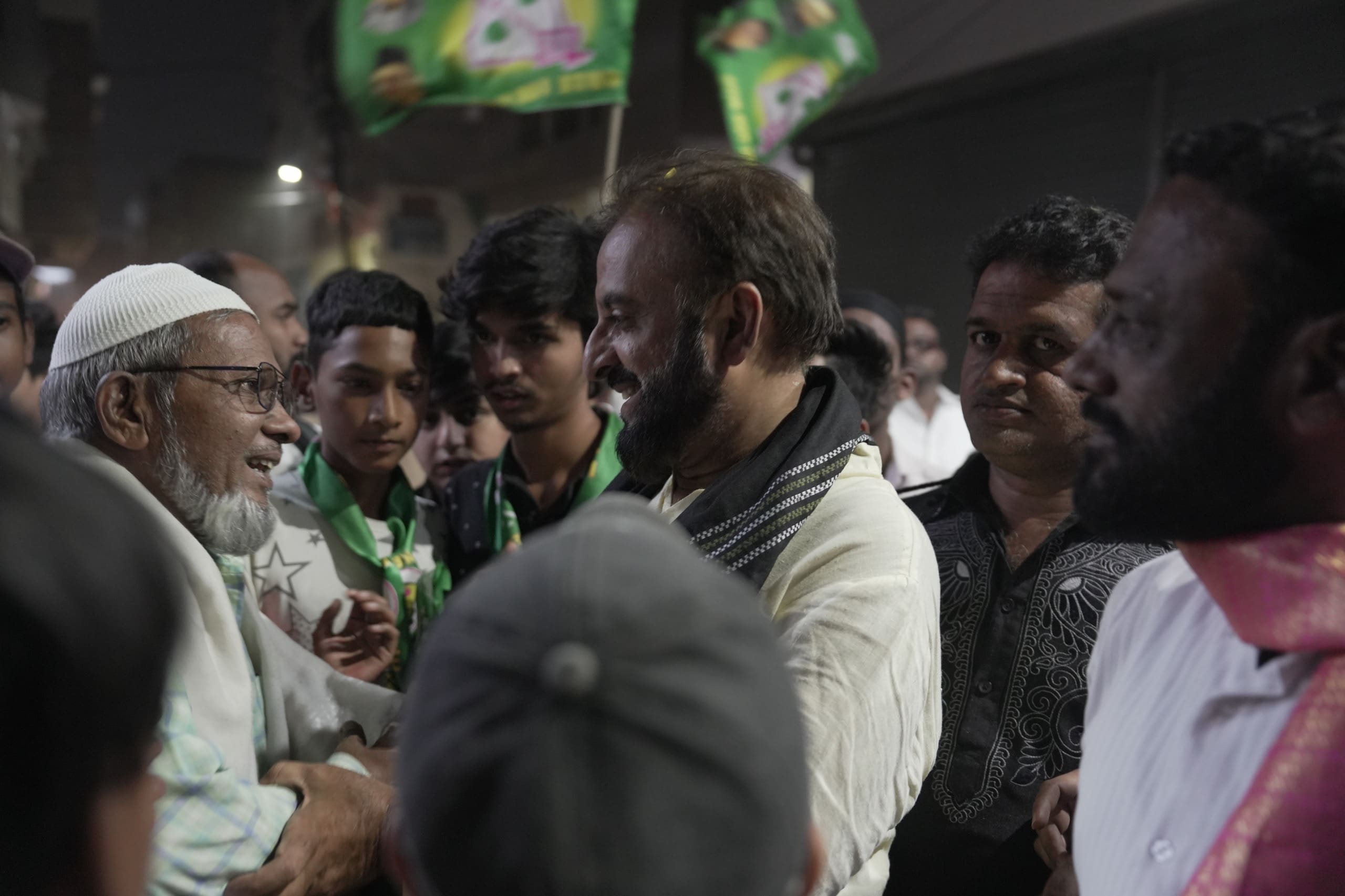
Aurangabad East and Aurangabad Central, in particular, is seen as one of AIMIM’s most influential constituencies outside of Hyderabad. The party’s state president and candidate for Aurangabad East, Imtiaz Jaleel, highlighted the importance of unity among religious minorities, Dalits, and backward classes. He emphasised that AIMIM is dedicated to amplifying their voices in the legislative assembly. “Aurangabad's minority vote, Dalit vote, and backward class vote, combined with the leadership of Owaisi Sahib and local leaders like myself, give credence to our campaign,” Imtiaz Jaleel told Maktoob.
While AIMIM’s campaign focuses on addressing the needs of marginalised communities, Jaleel also pointed out the divisive strategies being employed by rival parties. “BJP is trying to create religious division and hatred among people. They think they can win like that,” he said. However, he expressed confidence that voters would see through these tactics and recognise AIMIM as a party that genuinely represents their interests.
In the 2024 parliamentary elections, Jaleel contested from the Aurangabad constituency but finished in second place, while the candidate from the INDIA alliance stood third. Despite this setback, Jaleel remains committed to reclaiming the constituency. “Our MLA won from this constituency in 2014, and I became MP in 2019. Unfortunately, I failed in the 2024 Lok Sabha elections, but the party has once again entrusted me to contest here,” he stated.
Voices from the Ground
The sentiments on the ground reflect a blend of hope and discontent. Local Majlis worker Ishaque Andewala expressed a desire for leadership that unites people. “I want the candidate who works for everyone and brings everyone together to win. The party that talks about love and brotherhood should win. Majlis is a part of Mahavikas Akkadi itself, although it is not explicitly expressed. As a result, even the Congress is not putting in much effort. Everyone here believes in Imtiyaz Jaleel," he said.
Thanveer, a local journalist, told Maktoob, “Apart from the BJP’s candidate, Atul Moreshwar Save, there are four other candidates contesting: INC’s Lahu Hanmantrao Shewale, SP’s Abdul Gaffar Quadri, AIMIM’s Imtiaz Jaleel, and VBA’s Afsar Khan. This division of secular votes among multiple candidates will ultimately benefit the BJP.”

Women, in particular, are vocal about pressing issues such as the rising cost of education and limited access to water. Nusrat Jahan, a resident of Aurangabad, criticised the state’s welfare schemes, saying, “The Ladli Bahan Yojana, which provides ₹1,500 per month to women, is not a permanent solution. Meanwhile, the cost of goods and unemployment continue to rise.”
Others pointed out the city’s infrastructural challenges, including irregular water supply and a lack of affordable educational opportunities, which remain key election issues.
A potential kingmaker?
With Maharashtra heading toward what is anticipated to be a hung assembly, AIMIM could emerge as a crucial player in post-election negotiations, claims Jaleel. He confidently stated, “A hung government is expected in Maharashtra, positioning AIMIM as a ‘kingmaker.’”
Responding to allegations of being the BJP’s “B-team,” Jaleel clarified AIMIM’s limited scope in the elections. “We are contesting only 16 out of 288 seats. Our focus is on representing the underrepresented.”
Naser Siddiqui, the AIMIM candidate from Aurangabad Central, argued that Muslims have long been treated as mere vote banks by other political parties. “While they offer us representation in local body elections, they deny us seats in state assemblies and parliament. It’s clear—they don’t want Muslims to sit alongside them in these halls of power,” he said.

Siddiqui further emphasised AIMIM’s independence, stating, “We are not here to act as vote cutters or as the BJP’s ‘B-team.’ Out of 288 seats, AIMIM is contesting only 16 in Maharashtra. Remember, we didn’t contest in Haryana, yet Congress still failed to capture power. Our mission is clear: We will do whatever it takes to defeat the BJP.”
As the campaign gains momentum, AIMIM’s strategy in Aurangabad and across Maharashtra is shaping up to be a litmus test for the party’s influence beyond its Hyderabad stronghold. With its focus on grassroots issues and uniting marginalised communities, AIMIM aims to counter polarisation and prove its mettle as a party of inclusive governance.